
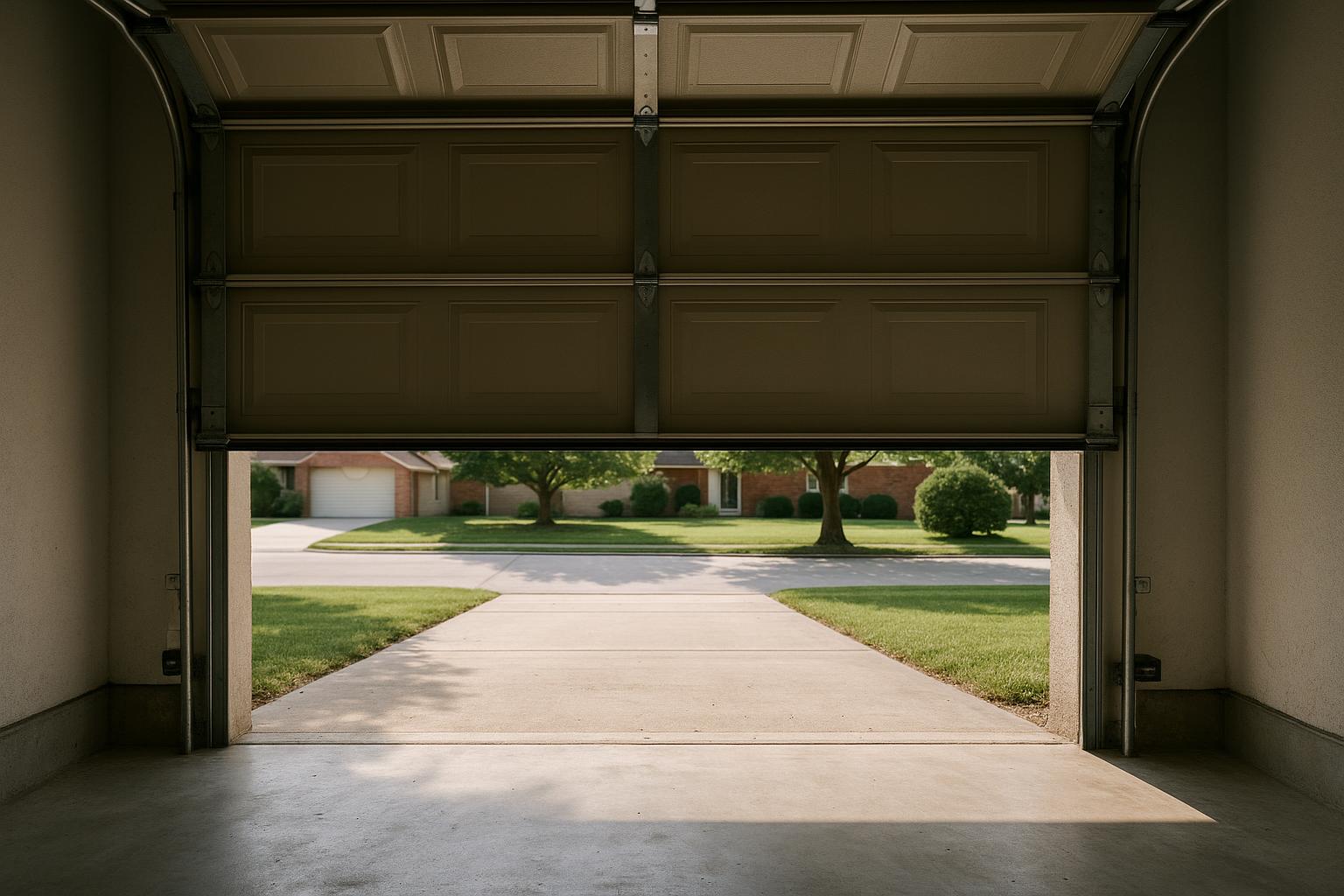
That Frustrating Moment When Your Garage Door Won't Stay Closed
You press the button on your remote, watch the garage door start its descent, and then — right before it reaches the floor — it reverses and goes back up. You try again. Same thing. Maybe it works on the third try, maybe it doesn't. Either way, you're standing in your driveway in King wondering what just happened.
This is one of the most common garage door complaints we hear from homeowners, and the good news is that it's almost always fixable. The tricky part is figuring out which of several possible causes is behind the problem. Let's walk through the most likely culprits so you can understand what's happening and decide whether it's a quick DIY check or something that needs professional attention.
Understanding Why Garage Doors Reverse
Modern garage door openers are equipped with safety features that force the door to reverse under certain conditions. These features exist to prevent the door from closing on a person, pet, or object. Federal law has required these safety mechanisms on all residential garage door openers manufactured after 1993.
There are two primary safety systems at work:
- Photo-eye sensors: These are the small sensors mounted near the bottom of the door tracks on either side. They project an invisible beam across the opening. If anything breaks that beam while the door is closing, the door reverses.
- Auto-reverse (force sensitivity): If the door encounters physical resistance while closing — like hitting an object or binding on the tracks — it's designed to reverse direction.
When your door reverses unexpectedly, one of these systems is being triggered, or there's a mechanical issue confusing the opener into thinking there's an obstruction.
Check the Photo-Eye Sensors First
Nine times out of ten, when a homeowner in King calls us about a reversing garage door, the photo-eye sensors are the starting point. Here's what to look for:
Misalignment
The two sensors need to face each other directly. If one gets bumped — maybe by a bike, a trash can, or even a lawnmower vibration — the beam breaks and the door thinks something is in the way. Look at the indicator lights on each sensor. Most models show a steady green light when aligned and a blinking light when they're not. Gently adjust the sensor that's blinking until the light holds steady.
Dirty Lenses
Dust, cobwebs, and pollen can accumulate on the sensor lenses over time. Living in a area like King where we get our share of seasonal pollen, this is more common than you'd think. Wipe both lenses with a soft cloth and test the door again.
Sunlight Interference
Direct afternoon sunlight can overwhelm the sensor's infrared beam, essentially blinding it. If your garage faces west and the problem only happens in the late afternoon, this could be the cause. A simple sun shade or cardboard tube around the sensor can solve it.
Damaged Wiring
The wires running from the sensors back to the opener can get pinched, frayed, or chewed by rodents. Inspect the full length of wire for visible damage. If you find any, this is a repair best left to a professional to ensure it's done safely.
Check the Close-Force Setting
Your garage door opener has an adjustable setting that controls how much force it uses when closing. If this setting is too low, the opener interprets normal resistance — even the weight of the door itself settling into the closed position — as an obstruction and reverses.
Most openers have a small adjustment screw or dial labeled "close force" or "down force." Increasing it slightly can solve the problem. However, be careful not to set it too high, as this can override the safety feature that protects people and objects from being crushed. If you're unsure, it's worth having a technician calibrate it properly.
Look for Track and Hardware Problems
Sometimes the issue isn't with the sensors or settings at all — it's mechanical. Here are hardware-related causes that can make a garage door reverse:
- Bent or misaligned tracks: If the tracks that guide the door are bent, the rollers can bind and create resistance. The opener senses this resistance and reverses.
- Worn or broken rollers: Old nylon or steel rollers can crack, chip, or seize up, causing the door to stick at certain points during travel.
- Lack of lubrication: Dry hinges, rollers, and tracks create friction. A silicone-based garage door lubricant applied to all moving parts can make a noticeable difference.
- Damaged cables: Frayed or loose cables can cause the door to travel unevenly, triggering the auto-reverse.
If you notice your door shaking, jerking, or making grinding noises as it moves, there's likely a mechanical issue that needs hands-on repair.
The Travel Limit May Need Adjustment
Garage door openers use travel limit settings to know where the door should stop when fully open and fully closed. If the "close" travel limit is set too short, the opener thinks the door has reached the floor and hit something beyond it, causing a reversal.
Adjusting the travel limit involves turning a small screw on the opener unit. You want the door to close completely against the floor with just slight compression of the weatherseal — no gap, but no excessive force either. This can take a few rounds of testing to get right.
When to Call a Professional
Some of the checks above — cleaning sensors, tightening a loose bracket, or applying lubricant — are perfectly reasonable for a handy homeowner to tackle. But there are situations where calling a garage door technician is the smarter move:
- The door is heavy and you suspect spring or cable damage
- You've adjusted sensors and settings but the problem persists
- The tracks are visibly bent or the door hangs unevenly
- You hear loud popping or snapping sounds during operation
- The opener itself is old and may need replacement
Garage doors are the largest moving component in most homes, and the springs and cables involved are under tremendous tension. Working on these components without proper tools and training can result in serious injury.
Keep Your Garage Door Reliable with Regular Maintenance
The best way to prevent a reversing garage door — and most other garage door problems — is routine maintenance. A professional tune-up once a year can catch worn parts, misaligned sensors, and lubrication issues before they become frustrating breakdowns.
At King Garage Door Service, we help homeowners throughout King, Tobaccoville, Rural Hall, and the surrounding communities keep their garage doors operating safely and reliably. If your door keeps reversing and you can't pinpoint the cause, give us a call. We'll diagnose the problem, explain your options honestly, and get it fixed right the first time.